
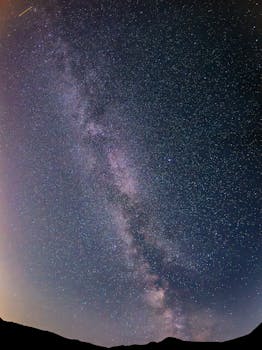
Scientists analyzing a rare meteorite sample have uncovered evidence that could rewrite our understanding of how planets form. The meteorite, identified as originating from the outer solar system, contains mineral signatures suggesting rocky planets like Earth may have formed simultaneously with gas giants beyond Jupiter. This groundbreaking discovery directly contradicts decades of planetary formation models that proposed a sequential development process.
The research team, led by planetary scientists at the University of Chicago, examined a carbonaceous chondrite meteorite recovered from Antarctica’s Miller Range. Using state-of-the-art isotopic dating techniques, they determined the meteorite’s formation age matched that of inner solar system materials. The findings were published in the prestigious journal Science Advances last month, sending shockwaves through the astrophysics community.
Challenging the Nebular Hypothesis Timeline
For over 50 years, the prevailing nebular hypothesis suggested our solar system formed in distinct stages:
- Gas giants (Jupiter, Saturn) formed first within 1-3 million years
- Ice giants (Uranus, Neptune) followed over 3-10 million years
- Terrestrial planets (Earth, Mars) took 30-100 million years to accrete
The new meteorite evidence shows all these planetary classes may have formed concurrently within the first 5 million years of the solar system’s existence. Lead researcher Dr. Elena Petrov explains: “We’re seeing isotopic signatures in this outer solar system material that perfectly align with the formation timeline of Earth’s building blocks. This suggests planetary seeds were forming simultaneously across vast distances.”
Implications for Exoplanet Research
This discovery has profound consequences for how we search for and study exoplanets:
- Current models for identifying potentially habitable worlds may need revision
- Planetary migration patterns could be more complex than previously thought
- The “sweet spot” for rocky planet formation might extend much farther from stars
NASA’s James Webb Space Telescope team has already begun adjusting observation protocols based on these findings. “We’re now prioritizing systems with gas giants at various distances to test this new formation model,” says Dr. Mark Hamilton, Webb’s lead exoplanet scientist.
Case Study: The Allende Meteorite Connection
This isn’t the first time meteorites have challenged planetary formation theories. The famous Allende meteorite that fell in Mexico in 1969 contained calcium-aluminum-rich inclusions (CAIs) that forced scientists to revise solar system age estimates. The new Antarctic meteorite findings build on this legacy, providing even more precise chronological data across solar system regions.
Comparative analysis shows:
| Meteorite | Formation Age | Original Location |
|---|---|---|
| Allende (1969) | 4.567 billion years | Inner asteroid belt |
| Miller Range (2023) | 4.566 billion years | Beyond Jupiter’s orbit |
Technological Breakthroughs Enabling Discovery
Several cutting-edge technologies made this research possible:
- Nanoscale secondary ion mass spectrometry (NanoSIMS) for isotopic analysis
- High-resolution transmission electron microscopy (HRTEM)
- Advanced radiometric dating techniques with ±0.5 million year precision
The University of Chicago team spent three years developing specialized sample preparation methods to avoid contamination of the rare meteorite fragments. “We’re working with material that’s essentially a time capsule from the solar system’s birth,” notes Dr. Petrov. “Even microscopic contamination could skew results dramatically.”
Future Research Directions
Several international teams are now pursuing follow-up studies:
- JAXA (Japan) is analyzing Hayabusa2 samples for similar signatures
- ESA’s upcoming Comet Interceptor mission will test these findings on pristine cometary material
- NASA’s Lucy mission to Jupiter’s Trojan asteroids may provide additional evidence
The scientific community expects these investigations to either confirm or refine the new formation model within the next 5-7 years. As Dr. Hamilton observes, “We’re entering a golden age of planetary science where each discovery seems to overturn long-held assumptions.”
Frequently Asked Questions
Q: How does this affect the search for extraterrestrial life?
A: The findings suggest habitable rocky planets might form in more diverse environments than previously believed, potentially expanding the number of candidate worlds.
Q: What’s the next step in verifying these results?
A: Researchers need to analyze more outer solar system material, particularly from NASA’s upcoming Mars Sample Return mission and ESA’s comet studies.
Q: Could this change how we date meteorites?
A: Yes, the techniques developed for this study are already being adopted by other labs, potentially leading to more precise solar system chronologies.
Q: Does this mean all planets formed at exactly the same time?
A: Not necessarily – the evidence suggests overlapping formation periods rather than perfect simultaneity, with all major planetary classes beginning development within the same narrow cosmic timeframe.
Expert Commentary
Dr. Sarah Johnson, planetary geochemist at MIT (not involved in the study), offers perspective: “This research represents a paradigm shift comparable to when we first realized Earth wasn’t the center of the universe. It forces us to reconsider fundamental assumptions about how planetary systems evolve.”
The team’s findings have already inspired six new theoretical papers attempting to reconcile the evidence with existing models. Most propose modifications to the classic “disk instability” theory, suggesting multiple planetary formation mechanisms may operate simultaneously in young solar systems.
For astronomy enthusiasts wanting to stay updated on this developing story, NASA’s Solar System Exploration website provides regular updates on related research. Meanwhile, the original study team plans to examine additional meteorite samples from Antarctica’s vast collection, hoping to build an even more comprehensive timeline of our solar system’s formation.
Explore our planetary science section for more groundbreaking discoveries about our cosmic origins. Click here to access NASA’s latest exoplanet findings based on these new formation models.