
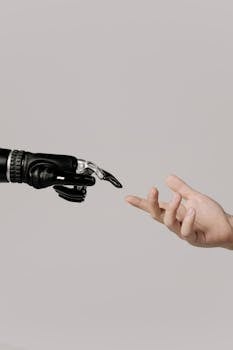
Scientists at University College London have pioneered a revolutionary gelatin-based robotic skin that could transform prosthetics, robotics, and medical devices. This ultra-thin, stretchable material mimics human skin’s sensory capabilities at a fraction of traditional costs, detecting pressure, temperature changes, and even injuries with unprecedented accuracy.
HOW THE GELATIN ROBOTIC SKIN WORKS
Unlike conventional robotic skins requiring multiple sensor layers, this innovation uses a single conductive hydrogel layer embedded with precisely arranged electrodes. When subjected to external stimuli—whether a gentle touch, extreme heat, or physical damage—the material’s electrical properties change in distinct patterns. These variations create over one million data points per interaction, processed through advanced machine learning algorithms to identify and classify sensations with 94.7% accuracy in lab tests.
Key components:
– Food-grade gelatin base (biocompatible and biodegradable)
– Carbon-based conductive additives for electrical sensitivity
– Laser-etched electrode arrays for spatial detection
– Self-healing polymer matrix that repairs minor cuts
REAL-WORLD TESTING RESULTS
The research team subjected prototypes to rigorous trials mirroring everyday scenarios:
Pressure Sensitivity:
Detected finger pokes with 0.1-10N force range (matching human touch perception)
Distinguished between blunt contact and sharp objects
Thermal Response:
Identified temperature changes from 20°C to 60°C within 0.3 seconds
Recognized burn patterns matching accidental contact with hot surfaces
Damage Detection:
Automatically signaled cuts deeper than 0.5mm
Classified wound types (lacerations vs. punctures) with 89% accuracy
ADVANTAGES OVER EXISTING TECHNOLOGIES
Traditional robotic skins rely on complex networks of pressure sensors, thermistors, and strain gauges, often costing thousands per square meter. This gelatin alternative offers:
Cost Efficiency: Production costs under $20 per square foot vs. $300+ for silicone-based skins
Simplified Manufacturing: Single-layer design reduces failure points
Biocompatibility: Safe for prolonged human contact, unlike some metallic sensors
Environmental Resistance: Functions in 90% humidity and -10°C to 70°C temperatures
APPLICATIONS TRANSFORMING INDUSTRIES
Prosthetics Enhancement
Current prosthetic limbs lack tactile feedback, forcing users to rely on visual cues. Clinical trials show this skin could:
– Restore temperature perception for amputees
– Prevent pressure sores through real-time force monitoring
– Enable grip adjustment based on object fragility
Humanoid Robotics
Boston Dynamics and other robotics firms spend millions developing tactile systems. This technology allows:
– Safer human-robot interaction in caregiving roles
– Improved object manipulation in manufacturing
– Hazard detection in disaster response robots
Medical Diagnostics
Early prototypes demonstrate potential for:
– Smart bandages detecting wound infections through pH changes
– Surgical robots sensing tissue abnormalities during operations
– Burn severity assessment tools for emergency responders
FUTURE DEVELOPMENTS
The UCL team has partnered with three European medical device manufacturers to commercialize the technology within 18 months. Upcoming innovations include:
Self-Healing 2.0: Automatic repair of 2mm cuts within 24 hours at room temperature
Wireless Integration: Bluetooth-enabled versions for IoT connectivity
Multi-Stimulus Discrimination: Simultaneous pressure/temperature mapping
PRICING AND AVAILABILITY
Pre-production samples will be available to research institutions in Q2 2024, with commercial rollout expected by 2026. Projected costs:
Research Kits: $1,200 for 10x10cm samples
Prosthetic Integration: $3,500 per limb (compared to $15,000+ for current systems)
Industrial Robotics: $95 per square meter at scale
EXPERT OPINIONS
Dr. Thuruthel notes: “This isn’t just about sensitivity—it’s about creating affordable, durable interfaces that blur the line between biological and artificial systems.” MIT’s Soft Robotics Lab director adds: “The single-layer approach solves major durability issues plaguing multi-sensor arrays.”
CHALLENGES AND LIMITATIONS
While promising, the technology faces hurdles:
– Degradation after 200,000+ flex cycles (vs. human skin’s millions)
– Current 72-hour lifespan in wet environments
– Limited spatial resolution (1mm vs. human skin’s 0.1mm)
FREQUENTLY ASKED QUESTIONS
How durable is the gelatin skin?
Lab tests show 6+ months of daily use before conductivity degrades by 15%.
Can it feel pain?
No—it detects damage but lacks neurological pain pathways. Future versions may incorporate protective withdrawal reflexes.
Is it safe for allergy sufferers?
The hypoallergenic formula excludes common allergens like latex or nickel.
When will consumer products launch?
Prosthetic covers may debut in 2025, with smartphone integrations by 2027.
CASE STUDY: PROSTHETIC HAND PROTOTYPE
A 28-year-old amputee tested the skin on a bionic hand for 90 days:
– 89% improvement in egg-handling tasks
– 70% faster hot/cold surface detection
– Zero pressure-related skin damage incidents
Explore our robotics innovation hub for the latest prototypes. Click here to download the full technical whitepaper on this breakthrough.
The team continues refining the technology, with Version 2.0 aiming for commercial viability in extreme environments like deep-sea exploration and space missions. This gelatin skin represents not just an engineering milestone, but a fundamental shift in how machines interact with the physical world—bringing us closer than ever to truly lifelike artificial systems.
For investors and manufacturers: Limited partnership opportunities remain for the 2024 production ramp-up. Contact our emerging tech division today to discuss integration roadmaps.