
The Future of Human Purpose in an Age of Deepening Uncertainty
As we navigate the third decade of the 21st century, humanity faces unprecedented questions about our collective direction. The rapid acceleration of technological change, environmental instability, and shifting social paradigms have created a landscape where traditional notions of purpose are being fundamentally challenged. This existential ambiguity is not merely philosophical—it manifests in workplace disengagement, mental health crises, and societal fragmentation.
The Erosion of Traditional Purpose Frameworks
For centuries, human purpose was largely defined by external structures: religious institutions provided spiritual meaning, economic systems dictated vocational paths, and cultural narratives offered clear life scripts. Today, these frameworks are collapsing under the weight of digital disruption and globalization. A 2023 Pew Research study revealed that 42% of Americans under 35 report having “no definite life purpose,” nearly triple the percentage reported in 1990.
Technological Displacement and the Meaning Crisis
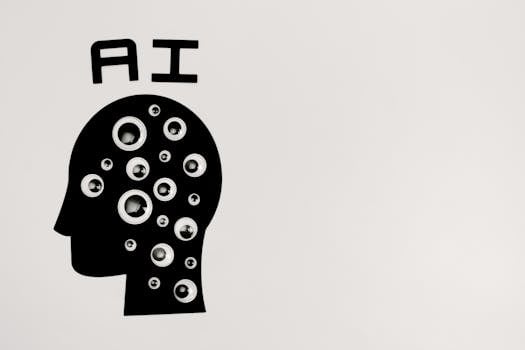
The AI revolution presents perhaps the greatest challenge to human purpose. As machine learning systems outperform humans in creative domains—from art generation to legal analysis—the unique value of human cognition comes into question. MIT’s 2024 Future of Work report predicts that by 2030, 47% of current white-collar jobs will either disappear or require complete reinvention. This isn’t just about unemployment; it’s about the dissolution of work-based identity that has anchored purpose for generations.
Environmental Anxiety and Intergenerational Purpose
Climate change introduces another layer of uncertainty. Younger generations face the psychological burden of planning lives in a world that may become uninhabitable. A Lancet Planetary Health study found that 75% of global youth experience “eco-anxiety,” with many questioning the ethics of bringing children into an unstable future. This represents a fundamental rupture in the human life script that has persisted for millennia.
The Rise of Poly-Purpose Living
In response to these pressures, new models of purpose are emerging:
Micro-Purpose Movements: Rather than seeking grand life narratives, people are finding meaning in small, daily practices. The “1% Better” philosophy—focusing on incremental self-improvement—has gained 300% more adherents since 2020 according to habit-tracking app data.
Digital Nomadism: Location-independent workers are redefining purpose through experience rather than stability. VisaGuide’s 2024 report shows a 217% increase in digital nomad visas issued worldwide since 2021.
Regenerative Economics: A growing contingent (estimated at 18% of millennials by Deloitte) are rejecting traditional career ladders to build circular economy businesses focused on sustainability.
Neuroscientific Insights on Purpose Formation
Cutting-edge research reveals that human brains are adapting to this new reality. Stanford’s NeuroPurpose Project has identified increased activity in the anterior cingulate cortex—the brain’s ambiguity processing center—among those thriving in uncertain conditions. Their findings suggest we may be evolving cognitive tools to handle purpose fluidity.
Corporate Responses to the Purpose Vacuum
Forward-thinking organizations are addressing this shift:
Patagonia’s “Anti-Career” Program: Employees rotate through radically different roles every 18 months to combat purpose stagnation.
Google’s “Meaning Metrics”: The tech giant now tracks employee purpose satisfaction alongside productivity KPIs.
BMW’s “Legacy Teams”: Cross-generational employee groups work on projects with 50-year time horizons.
Actionable Strategies for Navigating Purpose Uncertainty
For Individuals:
1. Develop “T-Shaped” purpose—deep expertise in one area with broad exploratory interests
2. Practice quarterly “purpose audits” using tools like the Ikigai framework
3. Build “meaning portfolios” that combine paid work, community impact, and personal growth
For Organizations:
1. Replace traditional mission statements with dynamic purpose frameworks
2. Create “ambiguity training” programs to build cognitive flexibility
3. Offer sabbaticals for employees to explore alternative purpose pathways
The Next Frontier: Purpose Technology
A new category of apps is emerging to address these needs:
PurposeOS (2024): Uses AI to analyze life patterns and suggest purpose adjustments
Temporal (YC W24): Helps users visualize multiple potential life paths simultaneously
CommonGround: Matches individuals with micro-communities based on evolving purpose alignments
Global Variations in Purpose Adaptation
Northern Europe leads in institutional support, with Denmark’s “Meaning Guarantee” program providing citizens with free purpose coaching. Meanwhile, Southeast Asia shows the highest rates of entrepreneurial purpose, with 68% of Indonesian startups citing social impact as primary motivation (2023 GSER Report).
Historical Context and Future Projections
This isn’t humanity’s first purpose crisis. The Industrial Revolution similarly upended agrarian life narratives. What’s different now is the compression of change—where previous transitions unfolded over centuries, we’re experiencing multiple paradigm shifts within single lifetimes.
Futurists predict three potential trajectories by 2040:
The Purpose Renaissance: A cultural flowering as humans integrate technology and ecology into new meaning systems
The Drift Age: Continued fragmentation leading to widespread anomie
The Hybrid Horizon: Emergence of human-AI collaborative purpose models
Your Next Steps in a World of Uncertain Purpose
1. Audit your current purpose drivers using the free Purpose Dynamics Assessment
2. Explore emerging purpose communities through platforms like CollabForge
3. Schedule quarterly “future self” conversations to track purpose evolution
The organizations and individuals who will thrive in this new era aren’t those with fixed answers, but those who’ve mastered the art of purpose navigation. As the old certainties dissolve, our greatest opportunity lies in collectively reimagining what it means to live meaningfully.
For those ready to dive deeper, our team has compiled the 2024 Purpose Playbook featuring case studies from 37 countries and actionable frameworks. Click here to access this exclusive resource.
Remember: Uncertainty isn’t the enemy of purpose—it’s the raw material from which new meanings are forged. The future belongs to those who can hold multiple possibilities without needing premature closure.